

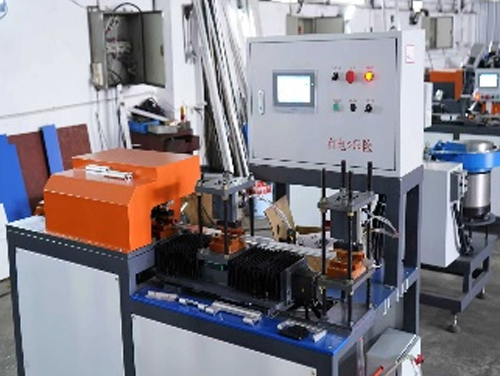
Ultra-Narrow Angle Coding Machine Maintenance Schedule: A Technical Guide
Industry Background and Market Demand
Ultra-narrow angle coding machines are critical in industries requiring high-precision marking, such as aerospace, automotive, and medical device manufacturing. These machines use laser or inkjet technology to apply permanent, micro-scale codes on components where space is limited. The demand for such equipment has surged due to stricter traceability regulations and the need for error-free part identification in automated production lines.
Maintenance schedules for these machines are not standardized across manufacturers, yet they significantly impact uptime and marking quality. Poorly maintained equipment leads to misalignment, inconsistent code legibility, and premature component wear—costing manufacturers thousands in rework and compliance penalties.
Core Technology and Operational Principles
Ultra-narrow angle coding machines operate using either:
- Laser-based systems: Fiber or CO₂ lasers etch codes by vaporizing material surfaces. They require precise beam alignment and cooling system upkeep.
- Inkjet systems: Piezoelectric or thermal inkjet heads deposit micro-droplets of ink. Nozzle clogging and ink viscosity control are common challenges.
Both technologies rely on high-resolution optics and servo-controlled positioning to maintain accuracy within ±0.05 mm. The "ultra-narrow angle" refers to the restricted space (often <5°) where the coding head must operate without interference from adjacent components.
Critical Components and Maintenance Factors
1. Optical and Mechanical Systems
- Lens and mirrors: Dust accumulation degrades marking clarity. Weekly cleaning with anti-static wipes is recommended.
- Galvanometer scanners: High-speed mirrors directing laser beams require recalibration every 500 operating hours.
2. Fluid Systems (Inkjet Models)
- Ink filters and pumps: Replace filters every 3 months to prevent particulate buildup.
- Nozzle plates: Ultrasonic cleaning every 2 weeks prevents clogging.
3. Motion Control
- Linear guides and bearings: Lubricate with high-vacuum grease quarterly to reduce friction wear.
- Encoder strips: Inspect for debris monthly to avoid positional drift.
4. Environmental Controls
- Temperature stability: Laser diodes and ink viscosity are sensitive to ±2°C fluctuations.
- Humidity: Maintain 40–60% RH to prevent condensation in optical paths.
Supplier Selection and Quality Assurance
When sourcing replacement parts or third-party maintenance services, evaluate:
1. Certifications: ISO 9001-compliant suppliers with documented MTBF (Mean Time Between Failures) data.
2. Material compatibility: Laser tubes and ink formulations must match OEM specifications to avoid corrosion.
3. Technical support: Providers should offer real-time remote diagnostics and <24-hour response times for critical failures.
Common Failures and Industry Pain Points
- Misalignment after maintenance: 60% of post-service downtime stems from improper recalibration.
- Ink drying in nozzles: Idle periods exceeding 72 hours often require costly printhead replacements.
- Vibration-induced errors: Machines installed near stamping presses suffer from encoder misreads.
Application Case: Aerospace Component Marking
A Tier-1 aerospace supplier reduced rework rates by 30% after implementing a predictive maintenance schedule for their laser coding systems. Key steps included:
- Automated beam profiling: Monthly checks using CCD cameras to detect power distribution anomalies.
- Vibration dampening: Isolating coding machines from nearby CNC mills with pneumatic mounts.
Future Developments
1. AI-driven predictive maintenance: Sensors monitoring laser power decay or ink pressure drops can trigger alerts before failures occur.
2. Modular designs: Swappable printheads or laser modules minimize downtime during repairs.
3. Eco-friendly inks: UV-curable formulations with longer shelf lives reduce waste.
FAQ
Q: How often should laser coding machines undergo full alignment checks?
A: Every 6 months or after 2,000 operating hours, whichever comes first.
Q: Can third-party inks be used in OEM inkjet systems?
A: Only if chemically validated. Incompatible inks void warranties and damage printheads.
Q: What’s the most overlooked maintenance task?
A: Cleaning exhaust vents. Overheating due to dust buildup accounts for 22% of laser failures (Source: Industrial Laser Solutions, 2023).
Conclusion
A disciplined maintenance schedule for ultra-narrow angle coding machines ensures consistent performance and compliance with industry standards. By prioritizing optical cleanliness, motion control integrity, and environmental stability, manufacturers can extend equipment lifespans while minimizing costly disruptions. As technology evolves, integrating IoT-based monitoring will further refine maintenance precision.
यह वेबसाइट यह सुनिश्चित करने के लिए कुकीज़ का उपयोग करती है कि आपको हमारी वेबसाइट पर सर्वोत्तम अनुभव मिले।
 English
 ไทย
ไทย Tiếng Việt
 বাংলা
বাংলা



 टेलीफ़ोन
टिप्पणी
(0)